

The Supreme Court has today (01/08/2025) ruled that lenders are not liable for hidden commission payments on car finance deals.
This landmark judgement is a major win for lenders and a significant setback for consumers hoping to claim compensation for mis-sold finance agreements involving undisclosed broker commission.
What’s the case about?
The Court of Appeal judges ruled on 25 October 2024 that consumers were mis-sold car finance because dealers (acting as credit brokers) failed to obtain fully informed consent before receiving commission from lenders. This applied to any type of commission, including fixed commission and discretionary commission arrangements (DCAs).
The ruling triggered a surge of complaints.
Lenders challenged the Court of Appeal ruling in the Supreme Court and partially won. This is now binding and cannot be overturned.
What did the Supreme Court decide?
The Supreme Court considered three test cases:
- Hopcraft -v- Close Brothers
- Wrench -v- FirstRand Bank Limited (London Branch) t/a MotoNovo Finance
- Johnson -v- FirstRand Bank
It ruled in favour of the lenders in two out of three cases, stating that non-disclosure of commission does not automatically make a finance deal unfair or unlawful.
But in the Johnson case, the Supreme Court upheld the consumer’s claim, stating that:
“Mr Johnson’s 55% interest rate and misleading documentation meant he could not have given fully informed consent.”
His finance agreement interest rate was considered excessive and the documents were misleading.
This is a significant endorsement from the Court that S140A of the Consumer Credit Act on contractual unfairness applies to cases were customers are the victims of excessive, undisclosed commissions.
The Johnson case had multiple elements that made the relationship potentially unfair.
The Supreme Court ruling is separate from the FCA remit on Discretionary Commission Arrangement (DCA) scope.
What does the Supreme Court ruling mean for motorists?
Consumers can still complain if their deal:
- Involved a Discretionary Commission Arrangement (DCA)
- The interest rate was excessive
- The finance agreement was unclear, unfair or misleading
Each case will be judged on its own merits.
FCA Response – DCA Complaints Still in Scope
The Financial Conduct Authority (FCA) has announced (03/08/2025) it will begin setting up a compensation scheme for consumers who where unlawfully sold car finance, unaware their car dealership was receiving a commission from the finance firm. The FCA intend to publish the framework for the compensation scheme in October and open it for consultation.
The FCA propose that the scheme covers Discretionary Commission Arrangements (DCA) – where the broker could adjust the interest rate offered to a customer – if they were not properly disclosed.
They will also consult on which non-discretionary commission arrangements should be included. This is because the Supreme Court decision in the Johnson case, which did not include the payment of any discretionary commission, makes clear that non-disclosure of other facts relating to the commission can make the relationship unfair.
The consultation will begin in October 2025 and affected consumers should start receiving compensation next year.
The FCA banned DCAs in January 2021, citing it would save motorists an estimated £165m a year.
If you took out car finance between April 2007 and 28 January 2021, you could still be entitled to compensation for Discretionary Commission Arrangement (DCA) finance agreements.
What are Discretionary Commission Arrangements (DCAs)?
The Financial Conduct Authority (FCA) began looking at this in 2017 amid concerns about Discretionary Commission Arrangements (DCAs), where sales staff could adjust the interest rate on car loans.
Under this model:
- Dealers could adjust the interest rate offered to the customer
- The higher the interest rate, the higher the commission they received
- The consumer was unaware of this financial incentive
This created a conflict of interest that the FCA found was unfair. DCAs were banned from 28 January 2021.

What the Financial Ombudsman Service has said – car finance decisions
In January 2024, the Financial Ombudsman Service (FOS) upheld complaints against:
- Clydesdale Financial Services Limited – agreement dated November 2018
- Black Horse Limited (part of Lloyds Banking Group) – agreement dated April 2016
Both complaints involved DCAs, and in both cases, the consumers were not told about the commission structure.
The Ombudsman previously upheld complaints involving undisclosed discretionary commissions. However, the Supreme Court decision means not all undisclosed commission breaches legal duties – so the FOS may now revise how it considers such complaints.
These decisions by the FOS at the time suggested that lenders and brokers were rejecting legitimate complaints against consumers.
Who is eligible to claim compensation?
The Supreme Court agreed with several factors the FCA identified which could point towards an unfair relationship and fall foul of the Consumer Credit Act (CCA), whilst recognising it depends on the facts of each case.
Such factors could include:
- Size of the commission relative to the charge for credit (was it excessive?)
- Nature of the commission, for example, whether it is discretionary
- Characteristics of the consumer (could you be considered vulnerable?)
- Compliance with regulatory rules
- Extent and manner of disclosure
You are likely to qualify for compensation if:
- You took out a PCP or HP agreement before 28 January 2021
- Your agreement involved a Discretionary Commission Arrangement (DCA)
- The commission structure was not disclosed
- The size of the commission relative to the charge for credit was excessive
- You complain within 3 years of becoming aware of the issue (this only came to light about 2 years ago)
- This includes those who still have an agreement in place, an agreement that ended within the last 6 years and much older agreements after April 2007 may be eligible.
Campervans and motorhomes for personal use are included, as they are classed as motor vehicles.
Who is not eligible?
- Personal Contract Hire agreements – leasing without a chance to own the vehicle
- 0% finance agreements – (no interest, no commission)
- Static caravans (these are not classed as motor vehicles as they do not have an engine)
How to Complain or Claim Compensation
Contact your lender to find out if your finance agreement included a Discretionary Commission Arrangement (DCA) and ask what the interest rate was.
Have the following ready (especially for older agreements).
- Finance agreement reference number
- car registration details
- Name and date of birth
- Previous addresses (if you have moved)
- Credit report reference details
Once your complaint is logged, that’s all you need to do.
You can also:
- Submit a complaint to the Financial Ombudsman Service (FOS) if unhappy with the response.
- If your final response was issued between 12 July 2023 and 29 April 2025, you have until 29 July 2026 to escalate to the FOS.
Firms currently do not have to provide a final response to relevant motor finance complaints before 4 December 2025. The FCA will consult on further extending this deadline to align with the timetable for compensation payments of the proposed redress scheme.
This will prevent disorderly, inconsistent and inefficient outcomes for consumers and knock-on effects on firms and the market.
Avoid Claims Management Companies
Do not use a Claims Management Company – it’s easy to do it all yourself and keep all the money you are owed. Their success rate is only 8% -v- 42% for consumers.
You can easily do it yourself for free – the Financial Ombudsman Service clearly explains the process. There are free templates and step-by-step guides available online.
You are more likely to win your case and keep all of the compensation you are entitled to.
Claims Management Companies have caused immense harm and disruption to the car finance industry by not operating in a genuinely compliant customer-focused way. They have abused the process and should be held accountable.
The Consumer Rights Act 2015 and finance agreements
As highlighted in the Johnson case (upheld by the Supreme Court), a consumer may still win if the rate was excessive and documents misleading – grounds that remain open under the fairness test in the Consumer Rights Act 2015.
The Consumer Rights Act 2015 has a fairness test.
The crux of this is: “Did the consumer know all material facts including the amount of commission and did they give consent?”
Key terms of a contract need to be fair, bold, balanced and transparent. They cannot be buried in the small print.
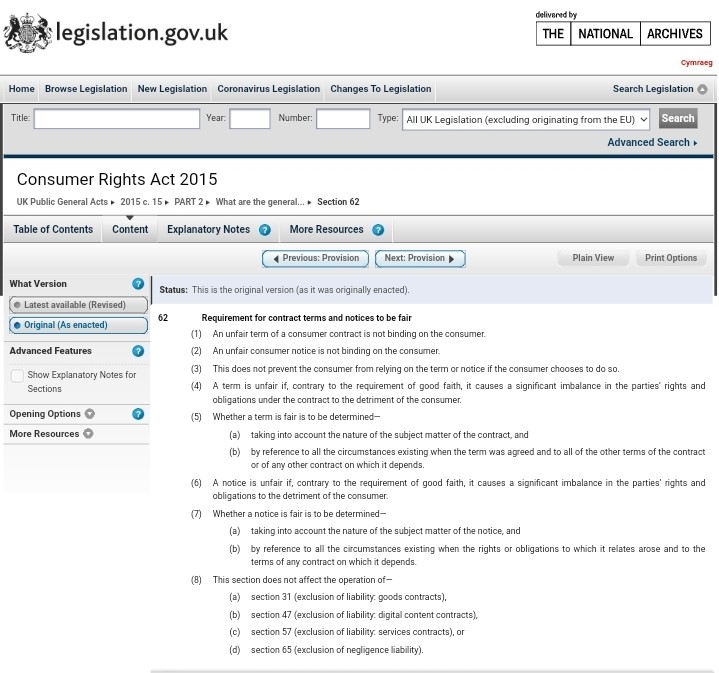
S62 Consumer Rights Act 2015 has a requirement for contract terms and notices to be fair.
S62 (1) Consumer Rights Act 2015 states that an unfair term of a consumer contract is not binding on the consumer.
S68 Consumer Rights Act 2015 has a requirement for transparency.
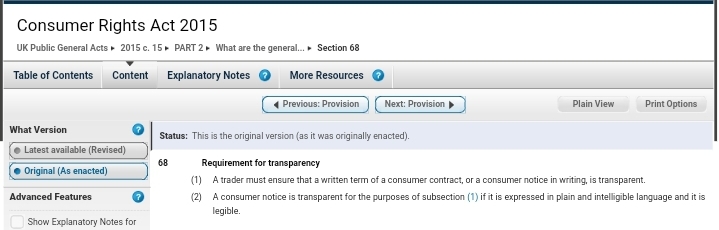
This supports complaints based on:
- Excessive interest rates
- Documents and terms were misleading
- Lack of informed consent
If you think your finance agreement qualifies, submit a complaint based on this ruling decision (Johnson -v- FirstRand Bank) from the Supreme Court.
If it’s rejected, ask for a ‘deadlock letter’ (final response), so you can escalate it to the Financial Ombudsman Service (FOS).
Car Finance Mis-selling Complaints
Many of these finance agreements are complex and consumers don’t understand how they work.
Providers usually have 8 weeks to respond to complaints. If they miss that deadline, consumers can refer their complaint to the Financial Ombudsman Service (FOS) without a deadlock letter or final response.
You usually have up to 6 months to refer a complaint to the Financial Ombudsman Service on receipt of a final response from a lender.
If you were sent a final response between 12/07/2023 and 29/04/2025, you will have until 29/07/2026 to refer your complaint to the Financial Ombudsman Service.
My View
This latest decision and update will come as a huge disappointment to many consumers who believed they were misled. While this decision narrows the route to compensation, it also provides clarity. Consumers and lenders now know where they stand. And the FCA can focus on reviewing and resolving legitimate complaints rather than facing a flood of speculative claims.
The Supreme Court ruling also provides a test case for consumers to refer to if they believe their finance agreement was misleading and the interest rate excessive.
Car lenders are not completely off the hook. Although the Supreme Court decision rules out all commission payments must be disclosed, the FCA remit on Discretionary Commission Arrangements (DCAs) is still likely to proceed.
The Johnson case has opened it to capture non-discretionary commission arrangements as well. This is because the Supreme Court decision in the Johnson case, which did not include the payment of any discretionary commission, makes clear that non-disclosure of other facts relating to the commission can make the relationship unfair.
The FCA has said it intends to publish the framework for this compensation scheme in October and may roll out a blanket redress scheme.
Lenders will have to set aside a pot for compensation claims once a pathway has been agreed by the FCA to compensate affected motorists.
If the Supreme Court upheld all three cases, car finance would be more difficult to obtain and car buyers would suffer. It could have potentially put huge dealerships out of business.
More expensive car finance
Ultimately, costs will still be passed on to consumers in the long-term regardless. This will likely restrict choice and lead to more costly finance agreements as lenders seek to recoup their losses.
If consumers were happy with the deal they got, should they have the right to retrospectively open a claim?
The DCA element is suspect, but are other commission arrangements? It’s questionable, even if it can be supported by consumer law.
People have to earn a living and commissions from lenders are paid to dealers and brokers. Brokers and dealers deserve fair remuneration, but hidden incentives that hurt consumers must be called out.
The amount a dealer and salesman makes on the car itself is usually quite modest. It’s the other stuff including car finance is where they make their money.
The upsell for add ons – GAP insurance, alloy wheel insurance, tyre insurance, protective coatings – this is where the money is made.
What are your thoughts on the Supreme Court decision? Are you affected?
