

The Financial Conduct Authority (FCA) announced today (13/11/2024) it will consult on extending the time firms have to respond to consumer complaints about motor finance where a non-discretionary commission was involved, and for consumers to refer them to the Financial Ombudsman Service.
The proposals are expected to be published within 2 weeks and, if taken forward, would mean the complaint extension is in place by mid-December 2024.
Consumers won a landmark car finance mis-selling case that could pave the way for car finance companies to pay billions of pounds in compensation to motorists.
The Court of Appeal judges ruled on 25/10/2024 these consumers were mis-sold car finance. The car dealers (acting as credit brokers) did not obtain fully informed consent from customers before receiving commission from lenders.
What does this mean for motorists?
This means any motorist who took out car finance between April 2007 and 28/01/2021 could be due a payout.
The Court ruled that a car dealer, or broker, must get a customer’s ‘fully informed consent’ to lawfully receive commission from a lender.
The lenders involved in the case have said they intend to challenge it in the Supreme Court. Lenders and brokers must follow this new ruling unless it is overturned.
The decision affects motor finance lending involving any type of commission, not just discretionary commission arrangements (DCAs), which the review focuses on.
In Hopcraft, Johnson and Wrench, the Court of Appeal decided it was unlawful for the brokers (car dealers) to receive a commission from the lender providing motor finance without obtaining the customer’s informed consent to the payment.
This required the consumer to be told all material facts, including the amount of the commission and how it was to be calculated. The judgment related to fixed commission in motor finance agreements as well as discretionary commission arrangements (DCAs), which were banned by the FCA in 2021.

How undisclosed commission cases work
These cases follow the same pattern:
- A consumer wants to buy a car from a dealer
- The dealer presents finance options to buy the vehicle – usually Personal Contract Plans (PCPs)
- The dealer acts as seller and credit broker (conduit) between the buyer and lender who is financing the car purchase
- Lender may pay the dealer commission which may not have been disclosed in the finance agreement terms and conditions and paperwork at the point of sale
Commission payments were usually linked to interest rates. Higher interest rates = higher commission payments.
The Financial Conduct Authority (FCA) began looking at this in 2017 amid concerns about discretionary interest commissions. Sales staff could adjust the interest rate on car loans and receive commission. The higher the interest rate, the more commission a sales person would receive.
The FCA banned this in January 2021 citing it would save motorists an estimated £165m a year.
The FCA is using its powers under s166 of the Financial Services and Markets Act 2000 to review historical motor finance commission arrangements and sales across several firms.
Who is eligible?
- Anyone who took out a PCP or HP agreement that involved a Discretionary Commission Arrangement (DCA) on a car for personal use before 28 January 2021 is affected.
The current Financial Conduct Authority (FCA) review is focused on DCAs, although the recent Court ruling captures all commissions.
- This includes those who still have an agreement in place, an agreement that ended within the last 6 years and much older agreements after April 2007 may be eligible.
- Those who have complained within 3 years of finding out there was a problem.
It’s estimated that 40% of these car finance agreements had hidden Discretionary Commission Arrangements in place.
Who is not eligible?
- Personal Contract Hire agreements – leasing without a chance to own the vehicle.
- 0% finance agreements – Discretionary Commission Arrangements involved increasing interest rates for higher commission payments.
- Static caravans.
Can I potentially claim compensation for hire or purchase of a caravan or motorhome?
This is a great question to ask.
The Financial Conduct Authority (FCA) are only investigating motor finance (not all vehicle finance) following complaints to the Financial Ombudsman Service (FOS) and rulings made by the FOS and recent Court of Appeal.
This does not include caravans but includes campervans and motorhomes for finance agreements taken out before 28/01/2021.
Caravans are not included as they do not have a motor / engine.
How do I apply for compensation?
You need to contact your lender to find out if your finance agreement included a Discretionary Commission Arrangement or any commission arrangements. They should normally respond within 8 weeks. If this is confirmed, respond by saying you wish to lodge a complaint.
Finance agreement reference number, car registration details, your name and date of birth, email address and credit reference agency records are different ways you can assist a lender find your details, particularly for older finance agreements.
Once your complaint is logged, you need to wait until the Financial Conduct Authority (FCA) completes its investigation and review.
This is likely to be complete by May 2025 – nothing will happen before then.
The FCA are expected to agree with lenders how to remedy affected customers.
If your claim is unfairly rejected, you can always refer your case to the Financial Ombudsman Service for free. You don’t need to use a Claims Management Company (CMC), who will take up to 40% of your commission for nothing.
You usually have up to 6 months to refer a complaint to the Financial Ombudsman Service on receipt of a final response from a lender.
Claims can be referred to the FOS on cases going back 6 years, or it can go back much further if you have complained within 3 years of finding out there was a problem.
The Consumer Rights Act 2015 and finance agreements
The Consumer Rights Act 2015 has a fairness test.
The crux of this is: “Did the consumer know all material facts including the amount of commission and did they give consent?”
Key terms of a contract need to be fair, bold, balanced and transparent. They cannot be buried in the small print.
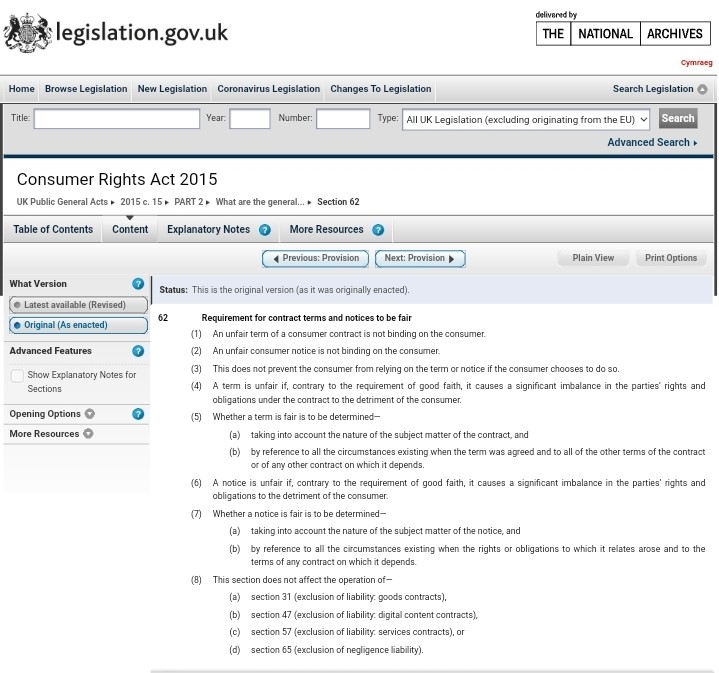
S62 Consumer Rights Act 2015 has a requirement for contract terms and notices to be fair.
S62 (1) Consumer Rights Act 2015 states that an unfair term of a consumer contract is not binding on the consumer.
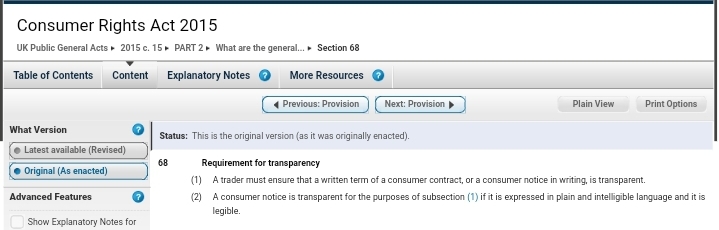
S68 Consumer Rights Act 2015 has a requirement for transparency.
Financial Ombudsman Service car finance decisions
The Financial Ombudsman Service (FOS) ruled in favour of two complaints in January 2024 against Clydesdale Financial Services Limited in November 2018 and Black Horse Limited in April 2016.
Both decisions revolved around discretionary broker commission models where the customer cited they were not made aware at the point of sale.
Other complaints have been successfully pursued through the County Courts.
These latest decisions by the FOS suggest that lenders and brokers are rejecting legitimate complaints against consumers.
This latest Court of Appeal ruling against FirstRand Bank and Close Brothers is likely to influence the Financial Conduct Authority’s (FCA) investigation and findings.
A Pause on Car Finance Mis-selling Complaints
Complaints about car finance deals apply on finance agreements before 28/01/2021 where a Discretionary Commission Arrangement (DCA) was in place.
The initial focus by the Financial Conduct Authority has been on DCA finance agreements.
The latest Court ruling states this applies to all commission payments where a consumer did not give ‘fully conformed consent’.
This does not apply if you bought the vehicle:
- on finance on or after 28/01/2021
- a ‘personal contract hire’ agreement
If you are unsure, just ask. Many of these finance agreements are complex and consumers don’t understand how they work.
Providers usually have 8 weeks to respond to complaints. If they miss that deadline, consumers can refer their complaint to the Financial Ombudsman Service (FOS) without a deadlock letter or final response.
The last update gave lenders and brokers a deadline of 25/09/2024 to respond to complaints on Discretionary Commission Arrangements (DCA).
This has been extended until after 04/12/2025 to give the FCA more time to complete their investigation and gauge options to remedy affected consumers.
You usually have up to 6 months to refer a complaint to the Financial Ombudsman Service on receipt of a final response from a lender.
If you were sent a final response between 12/07/2023 and 29/04/2025, you will have until 29/07/2026 to refer your complaint to the Financial Ombudsman Service.
What will the Financial Conduct Authority’s decision means for consumers?
This latest decision and update is good news for consumers and reinforces previous decisions made by the Financial Ombudsman Service (FOS).
It will set a higher bar with lenders and require greater transparency about commission payments.
How will consumers be impacted by the FCA extending the deadline to contact FOS / extending firms’ deadline to respond to complaints?
Brokers and lenders may see this as an opportunity to use sludge tactics to frustrate legitimate complaints and not respond to complaints in a timely manner.
They may fob off customers citing that the complaint is in the backlogs and is being dealt with, knowing that many consumers will simply give up and forget about it.
Many consumers risk losing out on compensation they are owed.
Do not use CMCs – Complaints Management Companies. Their success rate is only 8% -v- 42% for consumers. You can easily do it yourself for free with the Financial Ombudsman Service. You are more likely to win your case and keep all of the compensation you are entitled to.
Millions of motorists are affected by this car finance mis-selling scandal and could be entitled to thousands of pounds in compensation or have their loans rescinded.
My View
This will take some time to unwind as the FCA has to wait and see if the Court ruling is overturned on appeal.
It’s clearly a complex and fluid situation. The FCA wants to get this right to prevent disorderly and inconsistent outcomes for consumers and lenders.
Lenders will have to set aside a pot for compensation claims once a pathway has been agreed by the FCA to compensate affected motorists.
If dealers close and finance is harder to come by, car buyers will suffer. This could potentially put huge dealerships out of business.
Ultimately, costs will be passed on to consumers in the long-term. This will likely restrict choice and lead to more costly finance agreements as lenders will seek to recoup their losses.
If consumers were happy with the deal they got, should they have the right to retrospectively open a claim?
The DCA element is suspect, but are other commission arrangements? It’s questionable, even if it can be supported by consumer law.
People have to earn a living and commissions from lenders are paid to dealers and brokers.
The amount a dealer / salesman makes on the car itself is usually quite modest. It’s the other stuff including car finance is where they make their money.
The upsell for add ons – GAP insurance, alloy wheel insurance, tyre insurance, protective coatings – this is where the money is made.
What are your thoughts on this latest update? Do you think you are affected?
