
TyreSafe has launched its flagship Tyre Safety Month campaign for 2024 with a superhero themed initiative, “Caught in the ACT.”
As the weather changes and roads become more treacherous, this October’s campaign aims to engage, educate and inspire drivers to adopt lifesaving tyre maintenance habits.
The campaign highlights the importance of performing three key tyre checks—Air Pressure, Condition, and Tread—every month and before long journeys, empowering motorists to become tyre safety heroes.
Despite ongoing efforts to improve road safety, the Department for Transport’s latest report reveals a 29% increase in Killed or Seriously Injured (KSI) casualties linked to tyre-related incidents in 2023.
This alarming rise, from 147 to 190 casualties, marks the highest number of tyre-related incidents since 2018.
TyreSafe is calling for stronger action to address this issue, including better reporting of tyre conditions at the scene of accidents and stricter enforcement of tyre safety regulations.
TyreSafe urges all road users to prioritise regular tyre checks and advocates for government intervention to tackle this growing concern.
The TyreSafe campaign focuses on three key aspects of your car tyres that you should regularly check.
What are the three key tyre safety checks and why are they important?
Remember to ACT:
Air Pressure
Condition
Tread depth
Check tyre pressure
You should regularly check your tyre pressures.
You can find out the correct tyre pressure settings on your car by looking on the inside of the driver’s door frame for a label, vehicle handbook or by a Google search.
I carry a digital tyre pressure gauge and a plug-in tyre compressor so I can check anywhere without having to pay to use garage machines.
Condition
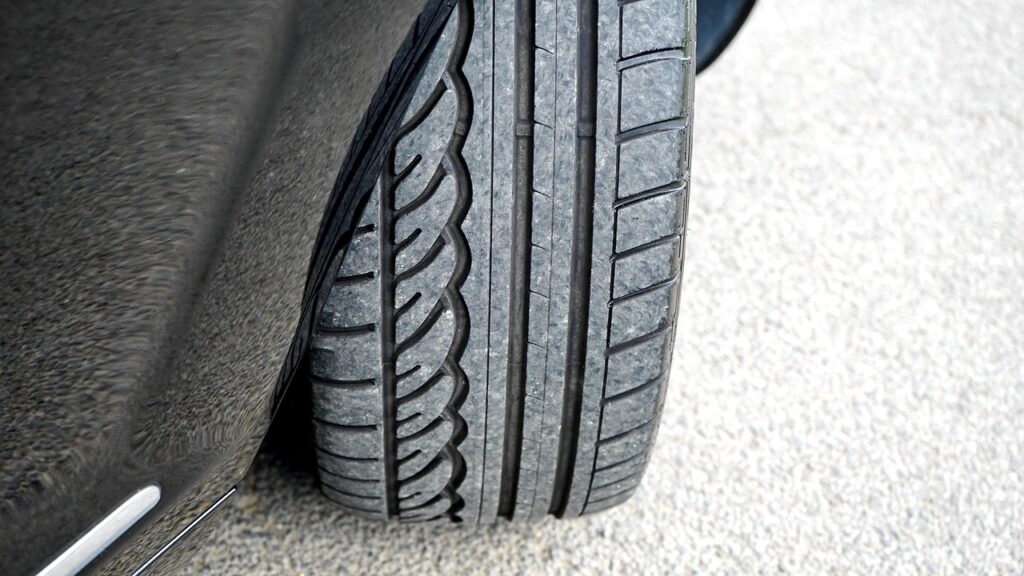
Check the overall tyre condition. Look for cuts, glass, nails, screws that may be in the grooves.
Don’t forget to check the tyre sidewalls for any damage.
Tread
Check the tyre tread and look for the tyre wear bars that run across the grooves.
What is the 20p tyre test?
The 20p test is a quick and easy way of checking the tyre tread. Just put a 20p coin into the tread grooves on the tyre. Your tyres are above the legal limit if you cannot see the outer band on the coin.

You can also use a digital tyre gauge for a more accurate measurement.
Look for the wear bars on the tyres as well. These run across the tyre grooves. Replace your tyres if the wear bars are close to the groove levels.
When must tyres be replaced?
It depends on how you drive, make of tyre and the car you own. Electric Vehicles (EVs) are much heavier than conventional cars with much higher torque and fast acceleration, which will increase tyre wear and shorten the lifespan.
The AA say you should get a minimum of 20,000 miles from front tyres on a front-wheel-drive car. Rear tyres can be double that. This is likely to be based on conventional cars – not EVs.
What is the date on the car tyres?
The tyre date is on the tyre sidewall as a four-digit code. The first two numbers are the calendar week in which it was made and the second two numbers are the year of manufacture.
A code 0120 indicates the tyre was made in January 2020.
Are 10-year-old tyres a MOT failure?
There are currently no MOT rules on tyre age for privately owned cars.
Are 5-year-old tyres ok?
There is no definitive tyre age limit on when you should replace your tyres. You should consider replacing tyres after 7 years and closely check their condition on the tyre wall and tread. Crazing on the tyre sidewall indicates tyre aging.
Will a plugged tyre pass a MOT?
There should not be an issue if a plug meets British Standards. Rules on plugging of tyres differ depending on their speed rating.
To put it into perspective, a plugged tyre on a Nissan Micra -v- a Porsche may influence a MOT tester’s opinion.
Is a tyre illegal if worn on edge?
Excessive tyre wear or damage (cuts and bulges) on the tyre sidewall from scraping on kerbs will make your tyres illegal.
Should you replace tyres in pairs?
Yes – they should be replaced in pairs. A new tyre with other worn tyres can create issues with the tracking and handling and can affect the balance of the car.
What are the disadvantages of Chinese tyres?
You get what you pay for. The main criticisms about Chinese brand tyres is increased average stopping distance, stiff and noisy ride and increased wear.
Ask a garage and mechanic you know and trust for their recommendations. What would they put on their car?
What does wheel tracking do?
Wheel alignment (commonly known as tracking) ensures your vehicle’s wheels are set to the car manufacturer’s specification.
How do I know if my wheel tracking is out?
Steering wheel pulling left or right, steering wheel vibration and wobble at certain speeds and uneven tyre wear can indicate that your wheel tracking and alignment needs resetting.
What causes car tracking to be out?
Hitting a kerb, potholes, worn suspension springs and general wear and tear are the main reasons.
Is it safe to drive with bad tracking?
Proper wheel tracking and balancing keeps you safe on the road. Misaligned wheels can affect the handling of your car and tyre wear.
I would recommend a check once a year, although it is something that most motorists do not consider.
The general poor state of the roads means that the tracking on your car can be knocked out regularly.
It’s worth getting your tyres and wheel tracking done before a service and MOT to ensure your car has the best chance of passing with no advisories or a fail.
How often do you check your tyres and tracking? Can you add anything to this?
